
The proper training equipment is the first step to practical life-saving skills, and it is important that the right CPR Manikin is chosen in order to have a successful medical education. Whether you are establishing a nursing lab, educating health care learners or providing emergency responsive training, the quality of the manikin directly influences the precision of skills and their confidence of the learners. This guide includes everything you need to know in order to make a well-informed decision without compromising on the standards of training.
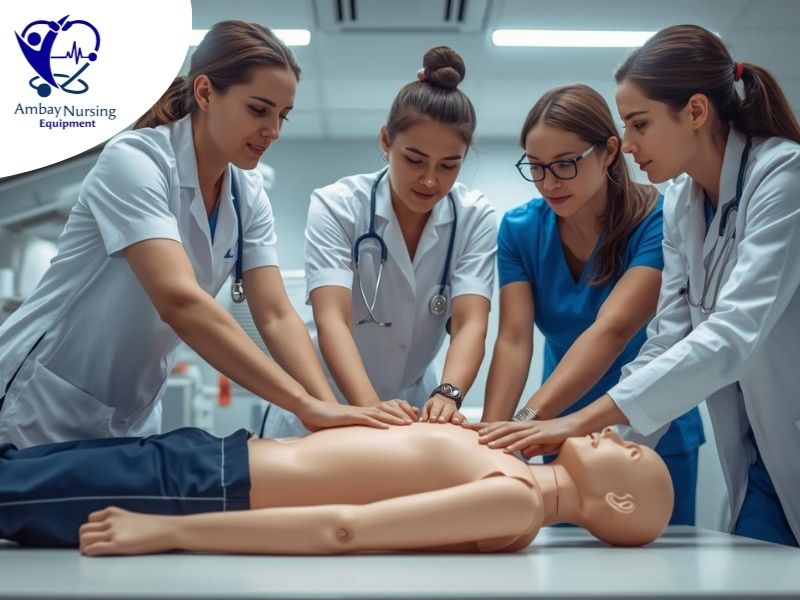
Table of Contents
Learning about the Role of a CPR Manikin in Medical Education
A CPR Manikin is a simulation model, which aims at guiding learners to train on cardiopulmonary resuscitation in a safe and controlled setting. It enables trainees to know compression depth, hand placement, airway control and rescue breathing without jeopardizing the life of patients. Modern medical education cannot do without these models due to their effectiveness in closing the gap between theory and real-world response.
The key to effective training includes realistic feedback, proper resistance given during compressions and proper anatomical landmarks. Using the wrong model may result in the incorrect development of technique, which might have an influence on the actual emergency results.
The Importance of Selecting the Right Model
The errors that happen in CPR are mostly as a result of poor foundation in practice. Educating employees about inappropriate models may lead to wrong posture, insufficient compressions, or slower response. Good CPR manikins assist in maintaining consistent skills development and enable the learner to master the right procedures during stress.
The institutions that have invested in the right simulation equipment have cited enhanced student performance, accelerated rate of skills acquisition and readiness to work in clinical settings.
The Major Things to Consider Before Purchasing
Anatomical Accuracy
The chest structure, rib stiffness and airways should be as close to actual human anatomy as possible. Proper models make sure that the learners get insight into realistic compression force and breathing resistance.
Compression Feedback
Several CPR training manikins also indicators of proper compression depth and rhythm are available. These feedback systems enable the instructors to rectify errors as they occur which enhances efficiency in training.
Durability and Construction Quality
Medical training equipment is utilized regularly. Materials ought to endure against repeated compressions though they should not lose their structural integrity over time.
Hygiene and Maintenance
Detachable cleaning parts, replaceable lungs, and easily-cleanable surfaces are necessary to keep the standards of hygiene, particularly in common learning settings.
CPR Manikin Types
Adult CPR Manikins
They are models that are designed to replicate the anatomy of adults and are usually utilized in nursing colleges, hospitals, and emergency response training.
Pediatric and Infant Models
The use of child and infant manikin assists age-specific CPR methods, which depend on the depth of compressions and the breathing strategies.
Half-Body vs Full-Body Models
Basic training is best done with half-body manikins, whereas more detailed simulation with patient positioning and emergency response scenarios are provided by full-body models.
Selection of CPR Manikins as Nursing Lab Training
The choice of CPR manikins for nursing lab should focus particularly on the compatibility with the curriculum. This requires repeated practice by nursing students thus they need models that allow high usage without compromising accuracy. Manikins are also useful in nursing labs to enable the instructor to show how it can be done correctly and, in this instance, students follow along and apply the technique at the same time.
Advanced nursing education frequently incorporates CPR training in the context of more comprehensive clinical simulations and, therefore, versatility would be a significant consideration.
Medical Training Manikin and Skill Development
Medical training manikins are becoming more and more important in modern education to provide real-world clinical experiences. These simulators enhance the confidence of learners because they reproduce emergency scenarios in a secure setting. They advocate systematic evaluations, practical testing, and testing of skills in a standardized way.
The chance of CPR training combined with more extensive medical simulation has shown students to have a more robust muscle memory and decision-making skills.
Comparison Checklist on Quality
The institutions should consider:
- Simulated recoil and airway response of the chest.
- Precision of anatomical landmarks.
- Ease of part replacement.
- Long-term durability.
- Ability to control and provide feedback to the instructors.
Higher quality CPR manikins have always shown superior results in terms of learner performance and training retention over basic CPR manikins.
Relied Choice for Medical Institutions
To promote trust in training, medical educators tend to make use of established manufacturers. Ambay Nursing Equipments is a company that is reputed to manufacture simulation tools that fit in the academic and clinical training requirements. Their emphasis on practicality, stability, and functionality facilitate the acquisition of skills in the long term within the learning settings.
The use of products by Ambay Nursing Equipments in institutions implies that the institutions have a stable performance throughout the training sessions and thus the educators are in a position to teach CPR in a structured and effective manner.
Through combining CPR models with the wider simulation tools, Ambay Nursing Equipments can assist in the overall hands-on learning of nursing and medical programs. Their solutions are meant to be able to respond to the changing demands of contemporary medical education.
Best Practices in CPR Training on Manikins
- Start by training the basics of posture and the position of hands.
- Feedback-enabled models should be introduced when the basics are gained.
- Switch students among various CPR training manikins.
- Order periodic equipment maintenance.
- Hygiene is maintained by proper hygiene measures.
These practices are all that guarantee safe, effective and standardized learning outcomes.
CPR Manikins Training and Skill Retention
Muscle memory, timing and confidence are the key elements in effective emergency response, which is developed through repeated practical experience. Properly designed CPR Manikin will provide uniform training results since the trainees will be able to practice the compressions and ventilation until these actions become automatic. Practising on real life models enhances the coordination and minimizes the hesitation in case of emergencies in life.
There is a noticeable difference between institutions that have and do not employ standardized CPR manikins in training sessions in terms of skill retention during reviews and assessments. The learners give more accurate work since they are trained in the conditions that are closely related to the actual scenarios. Such consistency is of particular significance in healthcare education, where inaccurate procedural execution can be extremely dangerous.
Compliance, Certification and Curriculum Alignment
There should be conformity between training equipment and institutional learning goals and accepted CPR guidelines. By selecting CPR training manikins that facilitate standard teaching models, it is necessary to ensure that students would achieve assessment standards during certifications and practical examinations. Training that emphasizes compliance can be used to teach educators how to provide structured lessons without going against the accepted practices.
In the case of academic institutions, the choice of CPR manikin for nursing lab also makes them compatible with curriculum requirements. When the equipment enables standardized teaching, instructors and learners get the advantage of having clear expectations, measurable outcomes, and enhanced credibility of training.
Conclusion
The selection of the appropriate CPR Manikin is not only a buying choice, but also a life-saving investment. Every detail counts between anatomical precision and robustness to their use in nursing laboratories and medical school training in general. Organizations, which focus on quality simulation tools, develop confident, competent students ready to face emergency situations in real life.
Training programs can provide high-impact, consistent, and professionally standards CPR education that can equip students with life-saving skills through careful consideration and high-quality suppliers such as Ambay Nursing Equipments.
FAQ's
Q1. Why is a CPR manikin appropriate in professional training?
An appropriate model presents realistic resistance, anatomical accuracy and consistent feedback to help the learners correct technique.
Q2. What is the number of CPR manikins a training lab is supposed to have?
Preferably, a manikin to every 4-6 students is more than enough to practice without congestion.
Q3. Are there advanced feedback systems required?
Even though not a requirement, feedback systems enhance accuracy of skills and confidence in the learner to a large extent.
Q4. Is it possible to use one manikin with several levels of training?
Yes, most medical training manikins can be used by the beginner and advanced learner when adequately instructed.