
Skeleton Models
ASS-1210
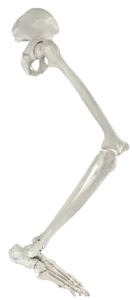
ASS-1210
Leg Bones Model Life Size
- Life size
- Made of PVC
- Accurate representation of the joints of leg
- Great detail of the bony structures of the human leg.
- It is able to demonstrate flexibility in the knee and ankle with limited flexibility in the foot. Also includes a half hip bone,femur, tibia, fibula and all foot bones.
- Each bone is separately mold and articulated.
- Key card/Manual provided.
Why Choose US
We provide high-quality nursing training models—from human torso replicas to advanced simulators—designed for realistic and effective learning. With trusted quality, affordable pricing, and dedicated support, we help educators and students build the future of healthcare with confidence.
For a detailed understanding of the leg bones and its functions, trusted anatomy resources like Visible Body and Kenhub provide clear explanations and visual guidance.
Leg Skeleton Model for Detailed Anatomy Learning
The formation of the lower limb is much easier to comprehend when students are able to observe a realistic anatomy model. The model of our leg skeleton is meticulously made to assist learners in investigating the finer details of the lower limb and how the bones interrelate to maintain the movement and balance of the body. We specialise in coming up with educational models that give a clear visual image of skeletal structures where the students can study how and where the bones are positioned, their shape and their relationship with each other practically and interestingly.
Our anatomical model has been made a genuine representation of the human leg skeleton therefore it is an effective teaching tool in medical colleges, nursing schools, physiotherapy schools of training and biological laboratories. With the three-dimensional model, learners can be in a better position to understand the complex setup of the lower limb and how it carries the weight in the body during day-to-day tasks such as standing, walking and running.
Table of Contents
Learning About the Leg Skeleton Structures
The leg skeleton is a vital component of the human skeletal system and a very important structure in mobility and stability. Our model is made to illustrate the connection and interaction of the bones of the lower limb with major joints like the hip, knee and ankle.
The lower limb is composed of a combination of muscles, which are combined to produce power and adaptability. A physical model of the human leg skeleton can enable the students to see clearly how each bone has a role to play in the movement and structural stability of the body.
Major Human Leg Bones in the Lower Limb
The use of our leg skeleton model for anatomy in learning emphasises the major bones that constitute the lower limb. These bones are well placed to fit the normal body anatomy and offer proper visual reference to students.
Some of the main human leg bones that are expressed in the model include:
- Femur: It is the longest and strongest bone of the human body with the upper part of the leg and between the hip and the knee.
- Patella: This is also referred to as the kneecap and it cushions the knee joint and helps in the movement of the leg.
- Tibia: It is the bigger bone of the lower leg bearing the majority of the weight of the body.
- Fibula: This is a thinner bone that is positioned next to the tibia, and which serves to stabilise the ankle and allow the muscles to be attached.
- Foot Bones: These contain tarsals, metatarsals and phalanges which aid in balancing and allow walking and running.
The observation of these human leg bones can enable students to have a clear idea of how the skeletal system contributes to body mechanisms and movemennt.
Advantages of a Leg Skeleton Model in the Study of Anatomy
Our leg skeleton model for anatomy is developed to be used in teaching anatomy in order to improve the practical learning in classrooms and labs. Anatomical models offer a practical learning experience, which makes the student visualise the complex structure more easily than with diagrams or illustrations on their own.
Our model facilitates learning in a number of ways:
- Demonstrates to students the individual human leg anatomy bones in a clear manner
- Shows the way joints link bones and assists in body movement
- Improves the learning process in the anatomy classes and demonstrations
- Gives teachers a chance to speak in more detail about skeletal structures
- Enhances the bone position and anatomy
FAQs
The leg skeleton model assists students to learn the structure and composition of bones in the lower limb and how it aids in supporting movement and balance.
It encompasses the bones of the foot, e.g., tarsals, metatarsals and phalanges, the patella, tibia, fibula and the femur.
Medical students, nursing trainees, physiotherapy learners, and biology teachers normally make use of it.
It enables students to see the bone structures in three-dimension which makes it easier to learn the identification of bones and joint relationships.
It assists students to know about body support, balance and movement which is relevant in medical and health sciences.