
Effective healthcare education works under practical training and a basic nursing manikin is a significant resource in helping students gain secure, certain, and repeatable clinical proficiencies. As an instructor, who creates hands-on sessions, or as a student, who learns how to use specific procedures, you will definitely know how to use this nursing manikin training device properly to achieve good skills. Training centers may easily establish effective practice sessions with brands such as Ambay Nursing Equipment that provide models that are long-lasting and ready to use in the classroom. The following is a step-by-step procedure that will help you to be able to use a standard practice nursing manikin in the proper way and with a lot of confidence.
Table of Contents
The Role of a Basic Manikin in Nursing Training Skill Development
The basic nursing training manikin is aimed at assisting students to learn the operations of patient examination, hygiene aid, mobility aid, basic wound dressing, and vital sign drill. Its anatomical arrangement is similar to that of a human body to the extent that it can be easily utilized to simulate repeated skills without the risk of damaging a real patient. It is always necessary to get acquainted with the features, movable joints, replaceable parts and maintenance needs of the model which are made available by the manufacturer prior to starting on any session, particularly when dealing with academically trusted brands such as the Ambay Nursing Equipment. This knowledge is useful in ensuring that students approach using the nursing manikin with confidence.
Step 1: Prepare the Training Environment
The working environment (medical training) should be neat, well-illuminated, and tidy before you begin working with a medical training mannequin. Prepare the use of gloves, towels, syringes (without needles), bed linens, stethoscopes, cleaning materials, and other items used in the practice. A neat arrangement will make sure that the students do not disrupt the process flow and destroy realism. Provided your nursing manikin has any accessory associated with airway management, dressing application, or tubing practice, then, leave it within easy reach of the manikin to simulate a clinical setting.
Step 2: Check the Manikin Prior to Each Session
At the start of each of the sessions, make sure to carry out an overall examination of the nursing skills manikin. Look into the loose joints, damaged parts and missing accessories. Make sure that the limbs are in a smooth prevail and that every part of the limbs supposed to be trained like injection pads, chest panels or pathways in the airways are in operation. A brief checkup is useful in ensuring the quality of training and increasing the lifecycle of the model particularly with a durable unit supplied by Ambay Nursing Equipment. This measure will guarantee that the nursing manikin is ready to be used during each session.
Step 3: Secure the Manikin on the Training Bed
Positioning is a very important aspect of learning. Position the nursing manikin on a flat training bed and position it in a natural position. Move the head, arms and legs just like you would on a real patient. The use of pillows or side rails to secure the nursing manikin is a way of teaching the learners how to handle patients safely. Proper body positioning is needed to demonstrate realistic demonstrations of bathing, turning, and transfers, as well as other processes that depend on appropriate body positioning.
Step 4: Show Fundamental Hygiene Process
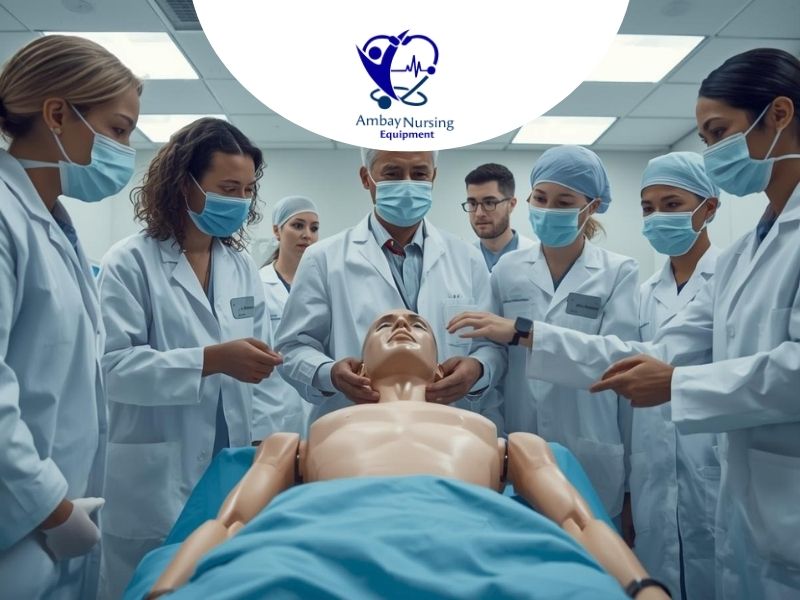
The initial basic care training is likely to begin with bed bath, oral hygiene and grooming. When working with the nursing training manikin, allow students to wipe the body, clean folds, brush teeth and make the patient comfortable. Ask them to adhere to infection control measures including wearing gloves, installing towels, checking the temperature of the water, and ensuring privacy which are critical in the clinical setting. These training programs make students feel assured and able to use a nursing manikin in the same way they usually do with a human patient.
Step 5: Mobility and Transfer Techniques
One of the basic skills is mobility assistance. The students are expected to exercise logrolling, manikin positioning, manikin relocating between bed and chair, and alignment of the body. Because the joints of the medical training mannequin are modeled to simulate realistic values of movement, the learners are able to practice safe body movement, gait belts, and team lifts. These actions are best rehearsed on a nursing manikin to increase confidence in later interaction with actual patients.
Step 6: Basic Assessment Skills
One of the most important applications of any nursing skills manikin is assessment. Students will have a chance to learn how to check pulse points, listen to the chest sounds (when the model allows it), observe the changes in the skin, assess hygiene requirements, and measure primitive parameters. Promote regular practice of clinical checklists to ensure learners adopt a mechanism of methodology during training. Performing evaluation on a nursing manikin enhances diagnostic accuracy when repeated.
Step 7: Use the Manikin for Dressing and Wound Care Practice
Wound dressing, bandage application and inspection of skin are many of the training situations. When dealing with a nursing mannequin simulation, allow the students to practice sterilization and non-sterilization dressings, cleaning artificial wounds, and learning to tape. The step will equip them to be able to carry out delicate duties with precision to enhance their comfort with the nursing manikin during advanced practice.
Step 8: Practice in Non-Invasive Medication Administration
A simple manikin will enable students to train in the administration of oral medications, demonstrating the theory of the IV, and locating injection landmarks. Always focus on safety guidelines- verification of right dosage, patient communication procedures and records. Although they are simulated, practice errors can be avoided through accuracy during practice, which prevents mistakes in the clinical environment. These simulations reduce risks because they use a nursing manikin.
Step 9: Teach Correct Manikin Cleaning and Maintenance
Cleaning must be done well after every session. Removal of linens, wiping the surface with weak disinfectant, and drying of the manikin. To ensure the longevity of training material special care instructions given by companies such as Ambay Nursing Equipment must be always adhered. The nursing manikin is in good condition since it is well maintained, which guarantees proper functioning and long-term reliability in all classroom demonstrations.
Step 10: Store the Manikin Properly When Not in Use
After the session is completed, place the nursing manikin in the neutral body position, arrange accessories, and place the model in a dry place. It should not be loaded with heavy objects. In case the manikin has electronic or modular parts, disassemble them and keep them separately in order to avoid any damage. The appropriate storage of the nursing manikin will guarantee it is not deformed and allows the manikin to be used in subsequent training cycles.
Conclusion
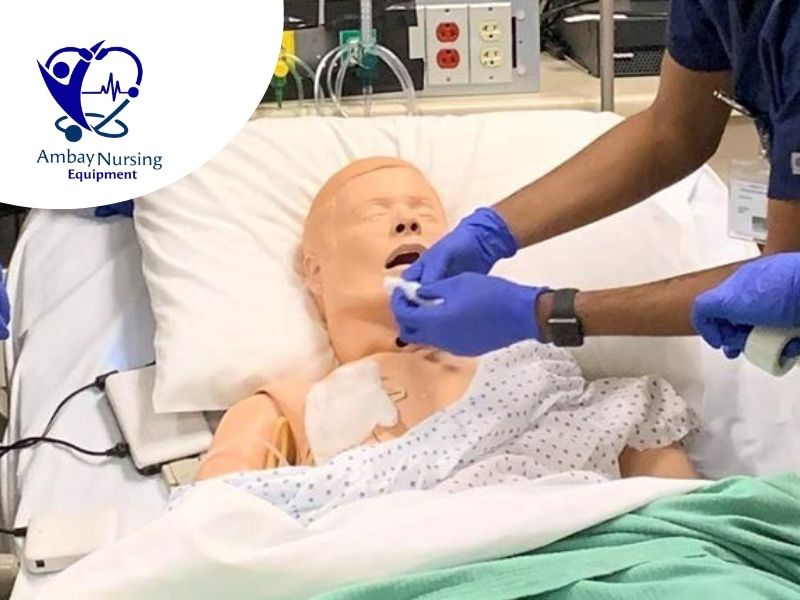
The fundamental nursing manikin is a vital instrument to produce proficient and secure healthcare providers. Through the systematic approach, namely, environment setup, inspection, hygiene practice, mobility assistance, assessment training, and proper maintenance, learners are able to obtain practical experience that reflects real-life interaction with patients. The training centers equipped with high-quality and reliable products of the Ambay Nursing Equipment can guarantee that students get safe and efficient training sessions that will instill long-term clinical confidence. Even basic models of nursing manikins can greatly increase the level of training and skill preparedness with the proper approach.
FAQs
Q1. What is the frequency of cleaning a basic training manikin?
Upon each usage to ensure hygiene and prolong life of the product.
Q2. Are students able to practice the art of making injections on a simple manikin?
Landmark identification is only permitted in most cases unless the model has special injection pads.
Q3. Why is positioning significant in the process of practice?
When using a nursing manikin, proper body mechanics will be taught by proper positioning, decreasing injury risk will be achieved, and increased realism will be realized.
Q4. Does a manikin assist in assessment skills?
Yes, it promotes practice in vitals, skin assessment, hygiene requirements and simple patient assessments to be performed with the help of a nursing manikin.